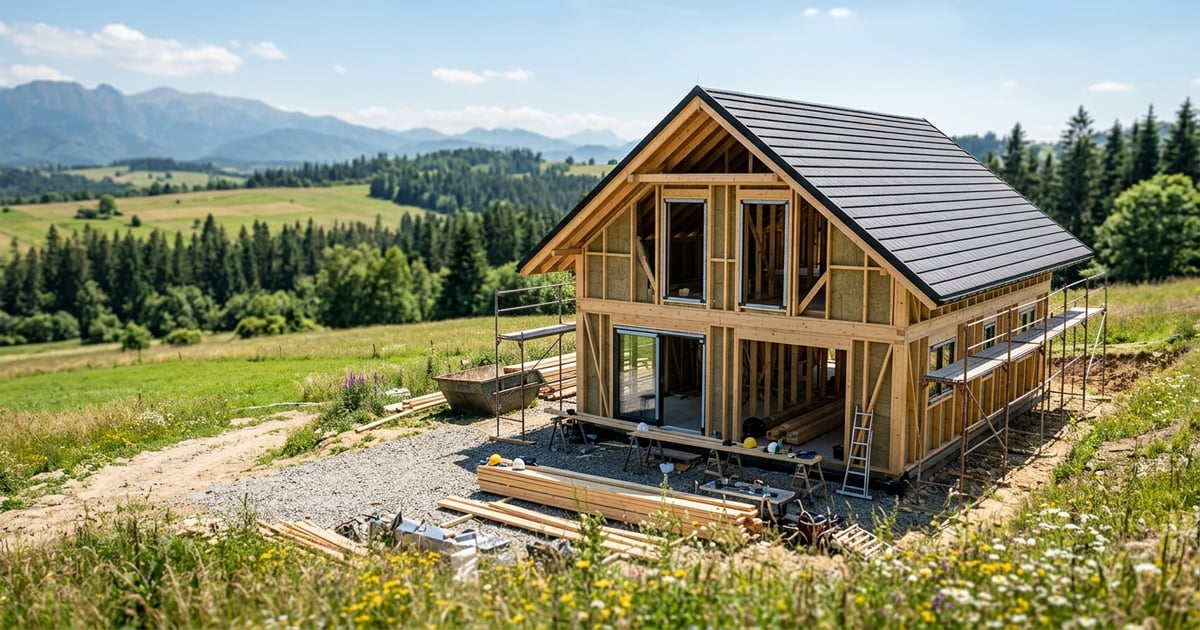
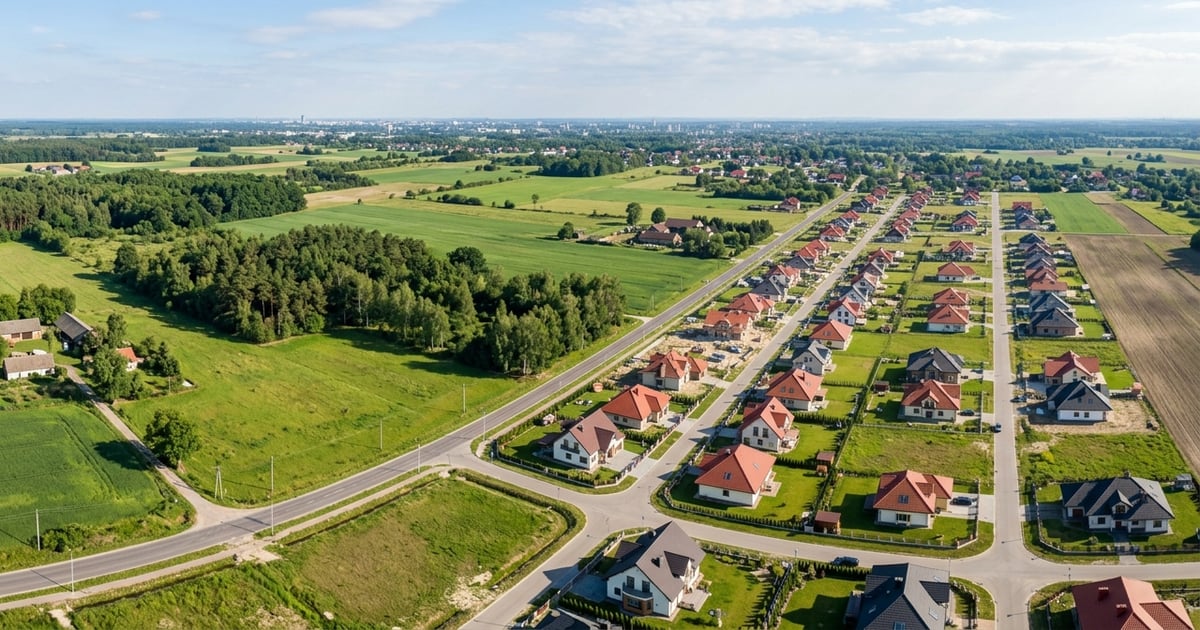
Generated with the help of AI
Zoning Conditions and Buying a Plot in 2026: A Complete Guide
---
Zoning Conditions and Buying a Plot in 2026: A Complete Guide
What are zoning conditions (WZ) and when are they required?
In short: The decision on zoning conditions (WZ) is a crucial document. It determines the land development possibilities when the municipality lacks a Local Spatial Development Plan (MPZP). Above all, obtaining a zoning decision is essential before starting an investment. Specifically, this document specifies what can be built and in what form.
The decision on zoning conditions is a fundamental spatial planning tool. It applies to areas without detailed municipal guidelines. Therefore, the absence of such a plan is the primary reason for submitting an application. By definition, a local spatial development plan dictates land use. However, if it doesn't exist, the investor must prove that the project is consistent with the landscape. Furthermore, an MPZP is an act of local law. In contrast, a zoning decision is an individual administrative ruling.
Many novice investors confuse these terms. However, it should be remembered that a WZ decision is just the first step. It absolutely does not authorize you to begin construction work. Only after obtaining it can you start the procedure to apply for a house building permit. The zoning decision only sets preliminary parameters. These include the maximum building height or distances from property lines. Consequently, without this document, an architect will not be able to adapt a ready-made house plan.
Can you get zoning conditions before buying a plot?
Polish construction law allows any interested person to submit an application. Importantly, you do not need to be the property owner. This is undoubtedly crucial information for people browsing current offers of building plots for sale. Verifying the land's potential is ultimately the best way to avoid a costly mistake.
Securing the transaction is the foundation of safe investing. Therefore, the best solution is a properly drafted preliminary plot purchase agreement with a condition precedent. This clause guarantees that the final contract will only be signed after a positive decision from the municipality. Consequently, it protects the buyer from acquiring useless land.
Applying for a zoning decision before purchase allows you to thoroughly check the municipality's plans. It often happens that the local government imposes strict requirements. It's worth knowing this in advance. Especially if you are planning a modern barn-style house, but the neighborhood dictates a traditional manor house.
How to get zoning conditions? A step-by-step guide
Step 1. Checking the legal status and municipal plans
First and foremost, before taking any action, you should check the local plans. This information can be obtained at the municipal office or on the national map portal Geoportal. Additionally, it's worth verifying the land and mortgage register. This will certainly help determine the soil class and any potential encumbrances.
Step 2. Securing the transaction with a proper agreement
If the area lacks a spatial plan, you should sign a preliminary agreement. This document must absolutely include a conditional clause. Furthermore, it's advisable to consult the content with a lawyer or notary. As a result, this will ensure the complete safety of your paid deposit.
Step 3. Obtaining necessary maps and opinions
Next, you need to visit the district office. You must purchase the appropriate maps there. Specifically, a base map at a scale of 1:500 or 1:1000 will be required. Moreover, you must apply to utility providers for connection conditions.
Step 4. Preparing the architectural concept and parameters
The next step is marking the boundaries on the map. Then, you must define the key indicators for the house. The building line and the biologically active area will be particularly important. Additionally, it's worth determining the roof geometry right away.
Step 5. Submitting a formal application to the office
The application can be submitted in person or sent via the government ePUAP platform. You must, of course, fill out the standardized form. Then, attach all the gathered documents and proof of payment to the application.
Step 6. Waiting for the urban analysis and decision
Once the documents are submitted, the office begins the procedure. An urban analysis of the neighborhood is then conducted. Officials check whether the building fits into the surroundings. At the same time, the municipality notifies the neighbors. Consequently, the involved parties have the right to raise objections.
Step 7. Analyzing the received conditions and finalizing the purchase
The final step is collecting the decision. You should carefully review the granted parameters. If the document meets your expectations, you can finally complete the transaction. In case of a refusal, the preliminary agreement allows you to back out safely.
Required documents
A complete application is undoubtedly the foundation for swift processing. Formal deficiencies significantly prolong the entire process. Therefore, below is a list of necessary attachments:
Filled out application form according to the 2026 template.
A copy of the base map at a scale of 1:500 or 1:1000.
Graphical determination of the investment area boundaries.
A detailed description of the planned utility demand.
An up-to-date extract from the land register.
Legally binding assurances from network operators regarding connection possibilities.
Proof of payment of the stamp duty.
Power of attorney, if the application is submitted by a third party.
- - - - - - - -
Costs and deadlines
The process of obtaining a zoning decision naturally involves costs. However, regulations differentiate between the situations of private and commercial investors. Therefore, it's always worth consulting these matters by visiting professional real estate offices and agencies. Specialists are familiar with the specifics of a given municipal office.
Investment type
Stamp duty
Estimated waiting time
Single-family house (own housing purposes)
0 PLN
From 2 to 6 months
Developer and commercial construction
598 PLN
From 3 to 12 months
What conditions must a plot meet to receive a WZ decision?
Obtaining a positive decision is by no means a mere formality. The land must meet a series of statutory requirements. The principle of good neighborhood is primarily crucial. This means that the new investment must fit in with the existing buildings. The office designates an analysis area for this purpose.
Another absolute requirement is access to a public road. The plot must adjoin it directly. Alternatively, it must have guaranteed access via an internal road. Without this, the office will certainly reject the application. Furthermore, the availability of utilities is equally important. The investor must prove the accessibility of utility networks.
The final important element is the issue of agricultural land. A WZ decision only applies to areas that do not require rezoning from agricultural use. If the plot consists of fertile soil, the process will consequently require complicated procedures.
2026 Regulatory Changes: General Plan and WZ Validity Period
The year 2026 undoubtedly brought revolutionary changes. The most important novelty is primarily the mandatory general municipal plan. It replaced the former spatial development study. The general plan now serves as the overarching filter for decisions. Municipalities, moreover, had until mid-year to adopt it.
The new regulations also introduce the concept of an infill development area. Consequently, this means the end of building houses in isolated areas. A decision can now only be obtained in designated zones. This aims to limit spatial chaos. Additionally, it optimizes the costs of building infrastructure.
Another key change is the time-limited validity of the decision. Previously, these documents were issued indefinitely. Currently, however, every new zoning decision is valid for only 5 years. The investor has exactly five years to apply for a building permit. If they fail to do so, the decision ultimately expires.
Most common mistakes
Buying land without preparation usually ends in problems. That's why the Dimdom platform recommends a thorough verification of documents. Below is a summary of the most common pitfalls:
Buying cheap agricultural land with the mistaken assumption of a quick WZ decision. Unfortunately, this often turns out to be impossible due to the soil class.
Skipping the verification of road access. The lack of an easement entered in the land and mortgage register effectively blocks the investment process.
Ignoring the principle of good neighborhood. Designing a modern structure among traditional houses usually results in a refusal from the office.
Lack of protective clauses in the agreement. As a result, the buyer loses their deposit if the office refuses to issue the zoning decision.
- - - - ---
Sources
- Ustalenie warunków zabudowy - Biznes.gov.plbiznes.gov.pl
- Wniosek o ustalenie lokalizacji inwestycji celu publicznego albo warunków zabudowy - Portal Gov.plwww.gov.pl
- Formalności przed zakupem działki - Archonarchon.pl
- Warunki Zabudowy od 2026 r.: co się zmienia i jak przygotować się do nowych zasadarchon.pl
- Warunki zabudowy przed zakupem działki – co sprawdzić, żeby nie przepłacić? - Flixhomeflixhome.pl
- Warunki zabudowy 2025: Jak uzyskać WZ i co zmienia plan ogólny?greenhomes.pl
- Jak Uzyskać Warunki Zabudowy? – Krok po Kroku 2025 - Roktonrokton.pl
- Warunki zabudowy 2026 - kiedy potrzebne i jak uzyskać WZ - Pozytywnie Zbudowanipozytywniezbudowani.pl