Generated with the help of AI
Energy-efficient homes 2026: Technology and cost comparison
Building an energy-efficient home in 2026 is a strategic decision that allows for significantly lower building operating costs over the coming decades. Investors most often consider two main approaches: traditional masonry construction and modern timber-frame structures. Choosing the right technology is crucial when planning a long-term investment, where not only the price of the shell stage matters, but above all, the building's high energy efficiency.
Energy standards for buildings in 2026
Modern construction in Poland is based on rigorous technical requirements. A key parameter is the EP indicator, which represents the annual demand for non-renewable primary energy. The lower the EP value, the more environmentally friendly and cost-effective the building is to maintain.
Every new home must have an energy performance certificate. This document is significant when valuing a property, as buyers pay attention to potential heating costs. When planning construction, it is worth checking attractive plots for sale to assess the land's potential in terms of orientation relative to the cardinal directions, which is crucial for heat gains.
Masonry vs. timber-frame homes: Technology comparison
Feature | Masonry home | Timber-frame home --- | --- | --- Thermal mass | High | Low Construction time | Longer | Very short Insulation | Depends on insulation | Very high
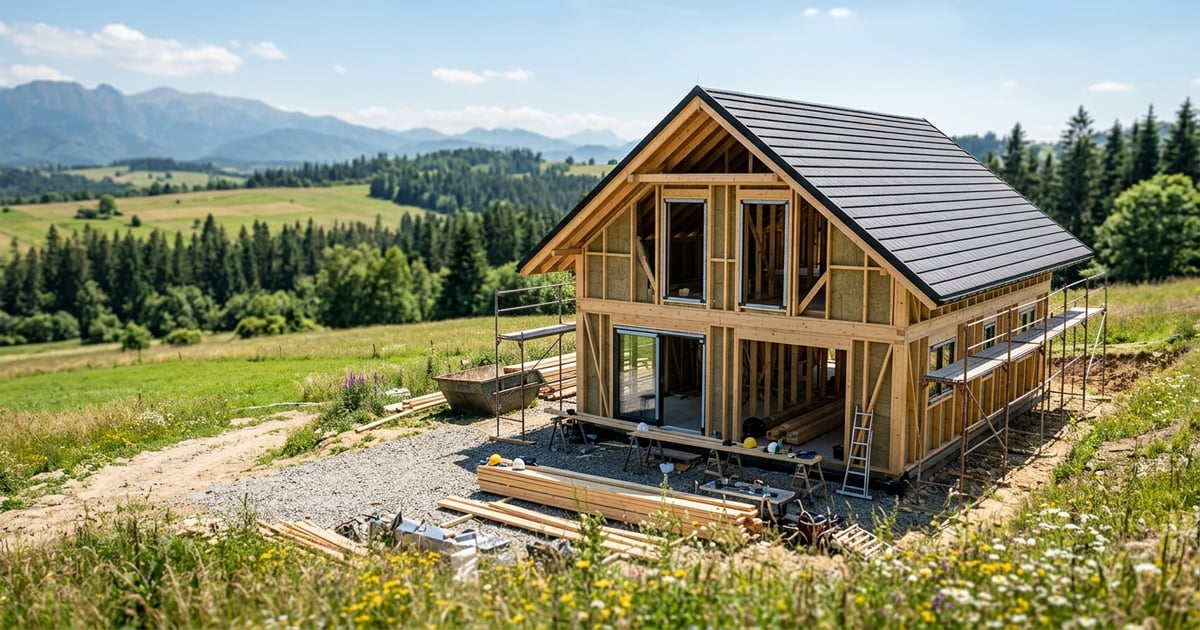
Traditional masonry homes are characterized by high thermal mass. The walls retain and release heat over a long period. This is a solution for those who value durability. Timber-frame homes offer speed of construction and lightness. In both cases, it is crucial to eliminate thermal bridges, which drastically reduce energy efficiency. More information on construction standards can be found in publications by the Ministry of Climate and Environment.
Analysis of energy-efficient home construction costs
Construction costs in 2026 depend on the quality of insulation materials and the sophistication of the installations. An energy-efficient home requires investment in high-class windows and a thicker layer of insulation. Although the shell stage may be more expensive, the return on investment comes through lower energy bills.
Those considering construction should follow company offers to avoid mistakes. It is worth checking collaboration proposals with professionals through trusted real estate agencies, who will advise on optimizing investment costs.
Renewable energy installations: What to choose for an energy-efficient home?
A modern energy-efficient home must utilize renewable energy sources (RES). Heat pumps have become a market standard. Combined with a photovoltaic installation and energy storage, an investor can become independent of market prices. Another essential element is recuperation, i.e., mechanical ventilation with heat recovery, which prevents energy loss.
Our recommendation
If you value durability: Choose a masonry structure with thick insulation. It ensures a stable indoor climate.
If time is the priority: A prefabricated or timber-frame house is the fastest way to live in a modern standard.
If you are investing in rentals: Focus on maximum energy efficiency. This increases the attractiveness of offers for houses for rent, guaranteeing lower costs for tenants.
- - -
Sources
- Warunki techniczne jakim powinny odpowiadać budynki i ich usytuowaniewww.gov.pl
- Dom murowany czy szkieletowy – który wybrać?budujemydom.pl
- Koszty budowy domu w 2026 rokumuratordom.pl
- Pompy ciepła i fotowoltaika w nowych domach – trendy 2026www.portalsamorzadowy.pl
- Program Czyste Powietrze i dotacje na efektywność energetycznąwww.gov.pl